Maya
Welcome to The Daily Shift!
I'm Maya.
Dave
And I'm Dave.
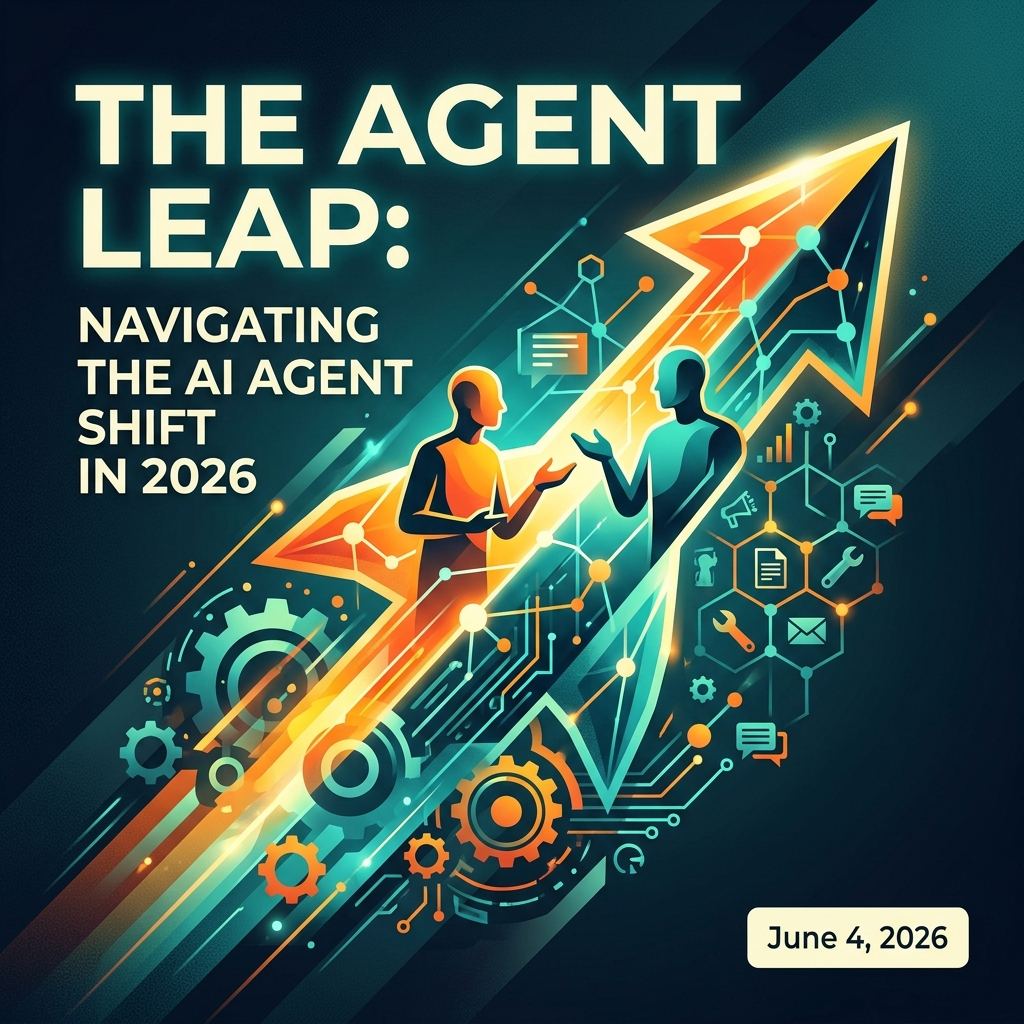
Today, we are talking about a massive pivot happening in how we work right now: the "Agent Leap."
Maya
Right.
If you feel like the era of spending half your day writing the perfect ChatGPT prompt is suddenly over, you’re not imagining it.
In 2026, we’re moving past simple chatbots to fully autonomous AI agents.
Dave
Exactly.
The big shift is from instruction-based computing to intent-based computing.
Instead of telling a tool step-by-step how to do something, you give it a broad goal and let it figure out the steps.
Think of tools like OpenAI's Operator.
It doesn't just draft text; it actually browses the web, fills out forms, and coordinates workflows across different platforms.
Maya
So, does this mean our actual day-to-day job descriptions are changing from "doer" to "manager of AI"?
Dave
That's exactly what's happening.
Every employee is essentially stepping into the role of an agent supervisor.
You set the strategy, define the guardrails, and let these digital teammates execute.
But, Maya, there’s a massive elephant in the room here.
Maya
Let me guess: the execution gap?
We've seen headlines about tech companies laying off staff to invest in these agents, but are they actually ready for prime time?
Dave
Honestly, not even close.
A recent study by Scale AI used their Remote Labour Index to measure how well these agents perform real-world, economically valuable tasks end-to-end.
They found that agents produce "client-ready," professional work less than five percent of the time.
Nineteen times out of twenty, they fail at complex reasoning.
Maya
Wow, five percent?
That is a staggering gap between executive hype and actual office reality.
It sounds like companies rushing to replace humans with agents are setting themselves up for some serious operational chaos.
Dave
Absolutely.
This disconnect is creating a lot of employee anxiety and what experts call a "capability overhang." The organizations winning right now aren't trying to replace their people.
They're focusing on "AgenticOps"—building the secure network infrastructure and protocols, like the Model Context Protocol, so humans can safely collaborate with these agents.
Maya
So, the takeaway for us?
Don't fear the agents, but don't blindly trust them either.
The future of work isn't about being replaced; it's about learning how to orchestrate these tools while keeping our human judgment front and center.
Thanks for tuning into The Daily Shift!
Dave
See you next time!